Natural stone earns its reputation the hard way. It lives under hot pans, red wine mishaps, tracked-in grit, and daily foot traffic. When it looks dull or blotchy, the problem is rarely the stone itself. It is almost always the absence of a thoughtful plan for stone cleaning and sealing, along with the wrong products and habits. After years providing professional stone care in homes, restaurants, and hotels, I have seen the same patterns repeat. The good news is that most stains and etches are preventable, and surfaces that seem tired can be coaxed back to life with the right strategy.
This is a deep look at how stone sealing specialists approach stain prevention, why one sealer does not fit all, and what maintenance routines actually work. Along the way, I will share the specific tactics we use in stone restoration services, from marble restoration on delicate vanities to granite restoration in busy kitchens.
The quiet difference between a stain and an etch
At least half of the frustration I hear could be solved by understanding this: stains and etches are not the same. A stain is a discoloration caused by a substance penetrating the pores of the stone. Oil from a fryer, pigment from coffee, tannins from tea or wine. An etch is a surface reaction, a chemical burn from acids like lemon juice or vinegar that dissolve minerals at the surface. The etched area looks light, sometimes matte, like a watermark that does not rinse away. Many people try to scrub etches with alkaline cleaners or magic erasers, which only increases the dull patch.
Sealants help with stains by slowing absorption, but no penetrating sealer can stop an acid from reacting with calcium carbonate. That is why marble and limestone vanities develop soft rings under a perfume bottle, even when “sealed.” Etches require stone etch removal, a separate process that involves honing and repolishing to restore the micro-surface. Stains respond to poultices and solvent work. Different problems, different tools.
Choosing the right sealer for the stone you own
Every job begins with identification. If a customer calls about a spotty island, I want to know if it is marble, dolomite, quartzite, granite, or a resin-backed stone. The mineral composition and finish dictate the sealing choice and schedule.
Granite and many quartzites tend to be less absorbent than marble or limestone, but there is wide variability. Some lighter granites drink water in six seconds and need a strong impregnator. Others, especially darker granites, resist almost everything and barely benefit from a sealer. Travertine and limestone are usually more open pored and will absorb quickly unless filled and sealed. Engineered stones and factory resin treatments change the equation too, sometimes rejecting sealer.
In broad strokes, you will encounter three categories of protection.
- Solvent-based impregnators that penetrate deep and offer strong oil and water repellency. They often last longest, two to five years on interior countertops, but require careful ventilation during application. Water-based impregnators that are easier to use and low odor. Modern formulas have closed much of the performance gap and are often my first choice inside homes with sensitive occupants. Topical coatings that sit on the surface. These can add sheen and short-term protection but tend to scratch, peel, or trap moisture. For natural stone restoration, we avoid topical coatings in kitchens and baths except in very specific cases, such as certain slate floors where a sacrificial finish is part of the design.
As a rule, I prefer high-quality penetrating sealers for most kitchen counters, vanities, and stone floor restoration, applied in thin, even coats and wiped fully dry. Excess left on the surface creates a tacky film that collects soil and leads to a splotchy look. countertop repair near me The goal is saturation, not shine.
Porosity testing that takes ten minutes and controls expectations
If you want to know whether your stone actually needs sealing, skip the guesswork and run a simple porosity test. Place dime-sized drops of water and a cooking oil on a clean, dry area. Time how long each drop darkens the stone. If water leaves a dark spot in less than five minutes, sealing will help. If oil darkens it quickly, you need an impregnator rated for oil repellency. If neither drop darkens the surface after 30 minutes, the stone may already be sealed effectively or is naturally dense, and the next step is to confirm with a small area test using a mild solvent.
When we take on granite restoration or stone countertop restoration, we test each slab face because porosity can change within the same installation. Quarries layer differently, and resin treatments vary. One end of an island might need a second coat, while the other is fine with one. Customers like to hear this before we start, not after a bottle of wine reveals the weak end.
A caution on color enhancers and the art of patience
Color enhancing sealers can be beautiful. On tumbled travertine or honed slate, an enhancer pulls deep tones up to the surface, enriching browns and greens without a high gloss. The mistake I see is applying a color enhancer to a stone that is still wet from cleaning or has latent moisture in the slab. Moisture trapped beneath an enhancer leads to clouding or a streaky appearance. On dense stones, enhancers can sit at the surface and become blotchy if not buffed carefully within the working time. A patient approach solves this: allow full dry time, sometimes 24 to 72 hours, test a discrete area, then apply thin, controlled coats and remove excess fully. Enhancers are not for every stone, and once applied, reversing them is a project.
Food-safe does not mean indestructible
For kitchen work, many clients ask for food-safe sealers. Most reputable impregnators cure to an inert, food-safe film. The phrase can be misleading, though, because it suggests a protective layer that repels anything. Real life is messier. Hot oil can sit long enough to overcome repellency. Turmeric can leave a yellow ghost on white marble if it is not wiped promptly. Red wine on a honed Carrara will migrate if it finds its way under a cutting board that traps moisture overnight.
Professional stone care helps manage risk, not eliminate it. That is why reputable contractors who handle stone polishing and sealing also talk about a maintenance plan and what to restore marble floor polishing do when something goes wrong.
The maintenance habits that quietly prevent most trouble
Sealers buy time, but daily habits decide whether the stone looks good five years from now. In high-traffic homes and commercial spaces, these routines take pressure off the protective coating and reduce the need for frequent natural stone repair.
- Blot spills quickly rather than wiping them across a larger area. A folded paper towel pressed for five to ten seconds lifts liquid from pores. Use a neutral pH cleaner designed for stone. Household vinegar, citrus cleaners, or bleach will attack calcareous stones and strip finishes on some slates and travertines. Keep counters and floors dry after cleaning. Moisture left under racks or mats creates haloing and encourages mildew in grout and pits. Use cutting boards and trivets. Knife tracks become micro scratches that catch soil, and thermal shock can crack even a robust granite. Vacuum stone floors with a soft brush head. Grit under shoes is the main cause of dull traffic lanes that people mistake for sealer failure.
These are small actions, but they compound. I have seen marble kitchens that handle daily cooking and coffee grinding for years without drama because the owners keep towels handy and wipe with neutral cleaner at the end of each day.
When stains happen: what a pro does first
Every stain has a source, and identifying it matters. Oil stains tend to look dark and diffuse with soft edges. Organic stains from coffee or wine leave colored patches that might respond to oxidizers. Metal stains from rust appear orange to brown and can follow the shape of a bottle cap or fastener below the slab. Ink stains behave differently depending on the solvent base of the ink and the stone’s finish.
In the field, we start conservative. For oil, a solvent-based poultice made with a manufacturer-approved solvent and an absorbent medium draws the contaminant out. The poultice stays in place, covered, for 12 to 48 hours depending on depth. For organics, an oxidizing poultice can work, but caution around colored stones is important, as some formulations can lighten surrounding areas. Rust removers exist for marble and limestone, but many are acidic and can etch, which means the sequence might be rust removal first, then stone etch removal and repolishing to merge the treatment area into the surrounding sheen.
The most common mistake is scrubbing a stained area aggressively with abrasive pads. You may lift the top layer of contamination, but you also create a dull spot that now demands polishing. Stains are a capillary problem. Let chemistry and absorption do the work.
The truth about marble in kitchens
Marble restoration is a significant part of our work, especially on white marbles like Carrara, Calacatta, and Danby. These stones are beautiful, but they sit on the front line against acids and pigmented oils. Homeowners ask whether they should avoid marble in kitchens altogether. The answer depends on temperament.
A honed finish will disguise light etching better than a high polish. Subtle etches on honed marble blend into the soft reflection and can be refreshed periodically with gentle honing. A polished marble counter shows every ring under bright light and will require more careful use or regular marble polishing services. Staining can be managed with quality sealers and habits, but etching will happen in a busy kitchen if acidic foods are present. For some people, the patina tells a story and they love it; for others, every new mark causes stress. The right stone is the one that matches how you live.
For clients who love the look but not the upkeep, we sometimes suggest a hard quartzite or certain dense dolomitic marbles that resist etching better. Even then, sample tests and expectations matter. Not every slab labeled quartzite is equal, and some are mixed with calcite that will still etch.
Granite is not bulletproof either
Granite restoration is simpler in many kitchens, since granite resists etching and heat better. Yet we still see issues. Resin-treated granites can show dull patches where resin has worn thin. Fissures catch grime and visually read as cracks until deep cleaning lifts the embedded soil. Oil near cooktops can cause dark halos that take a strong poultice cycle to resolve.
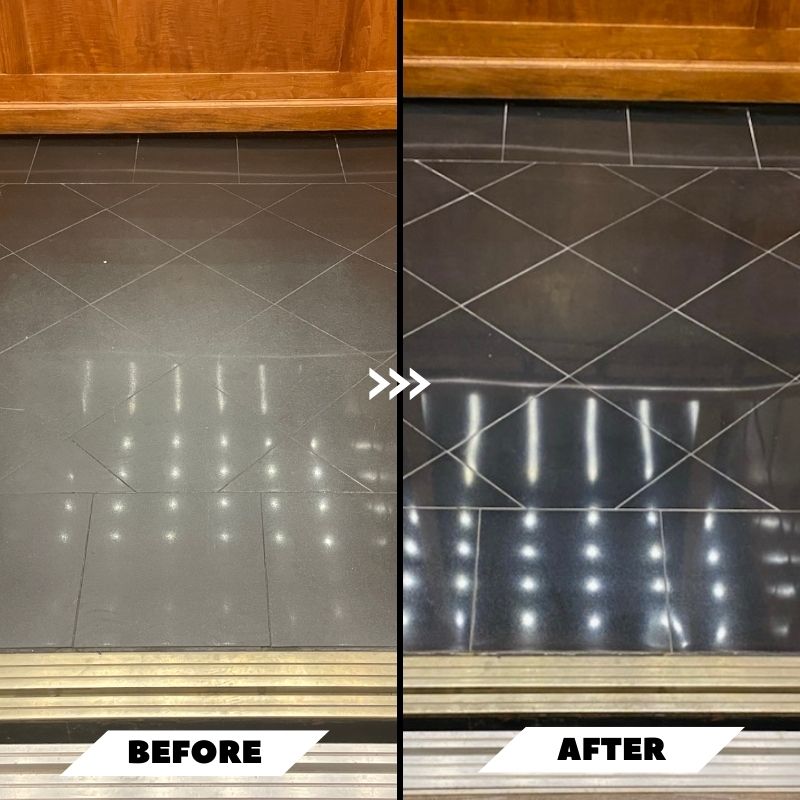
When granite loses luster, it is usually micro abrasion from years of wiping with gritty cloths or using powders, not a failure of the stone. Professional stone care restores the clarity with diamond honing and stone polishing and sealing, returning that crisp reflection that makes dark granite look wet even when dry. On lighter granites, sealing focuses on oil repellency because water staining is rare.
Limestone and travertine need a different touch
Limestone restoration and travertine restoration often blend structural and aesthetic work. These stones have open pores and, in the case of travertine, natural voids that can be filled. In kitchens and showers, we sometimes re-fill pits with color-matched resin to keep cleaning practical. The surface then takes a penetrating sealer suited for high-moisture environments.
Acidic cleaners can carve fine tracks in limestone, especially on floors. Once traffic pushes soil into those micro channels, the floor looks dingy no matter how much you mop. The solution is to reset the surface with a light hone, remove the embedded grime, and reseal. On floors, the conversation includes slip resistance. Highly polished limestone in a bathroom looks elegant, but a satin or honed finish with proper sealing is safer and ages more gracefully.
Polishing is not always about shine
People often think “polish” means glossy. In our trade, polishing is about refining the surface to a targeted finish, whether that is honed, satin, or mirror. Stone surface restoration involves a progression of abrasives and chemistry to align the surface at the microscopic level. For marble polishing services, we may stop at a low honed finish for a modern look that hides daily wear, or go up to a high polish on a vanity that loves bright reflection.
The choice is not only aesthetic. A high polish on marble increases surface tension and sheds water better, but it also shows etches more easily. A honed finish absorbs light and masks minor scratches. Polished granite, on the other hand, holds up well in kitchens because it resists acids, and the polish lasts longer under normal use. If a client asks for a heavily polished limestone kitchen floor, I explain the trade-off honestly and recommend a honed finish that we seal well and maintain.
Scratch repair and the myth of quick fixes
Stone scratch repair succeeds when the repair area blends seamlessly into the surrounding field. That means matching the finish and plane. Quick fixes with topical fillers might hide a scratch temporarily, but under side light or after a few weeks of traffic the patch telegraphs. For deep scratches, we feather out the surrounding area, bring the plane back, then repolish. On patterned stones, veining can be used to our advantage to disguise the blend line, but on uniform stones, patience and consistent technique matter. Clients appreciate hearing that a proper fix takes time and a steady hand.
When a stain refuses to leave: edges, sealers, and adhesives
Edge cases teach good habits. One memorable job involved a persistent oil stain around a cooktop cutout. Multiple poultice cycles made progress but the stain returned. The cause turned out to be oil wicking from beneath, where the countertop installer had used a generous bead of silicone adhesive that absorbed cooktop oils, then fed them into the stone over time. The cure was to remove the cooktop, clean and reduce the adhesive, then address the stone from both sides with poultice and a fresh seal.
Another tricky scenario shows up at sink rails where water lingers. Discoloration seems like a stain, but it is often mineral deposit buildup in the micro texture. We treat it like a scale problem, not a stain, using appropriate descalers on granites and quartzites and mild, controlled acid work only on acid-resistant stones, followed by a neutralizing rinse, rehone if needed, and reseal. On marble or limestone, that same descaling step would etch, so we go another route: mechanical honing to remove the buildup and refresh the surface, then sealing.
The timing of resealing and how to avoid the “never-ending” cycle
A well-chosen sealer does not require monthly reapplication. For most interior counters, a quality impregnator lasts a year to several years. The variable is usage. Commercial line kitchens that see hot oil every night may reseal every six months because the constant assault is relentless. A residential kitchen with careful habits might go two or three years before performance drops. You test performance with the same water and oil spot test you used initially. If water beads for 10 to 15 minutes and oil does not darken, you can wait. If absorption is quick, clean the surface thoroughly, allow it to dry, then reseal.
Oversealing causes trouble. Layering sealer on top of sealer without proper prep creates a sticky film that collects grime and makes the stone look cloudy. When we inherit this condition, we strip the surface with the appropriate solvent, rebalance the finish mechanically if needed, then apply a fresh, thin, even coat. The mantra is less product, better prep, and strict dwell times.
Commercial spaces and the rhythm of maintenance
Restaurants, hotels, and retail spaces drive home the importance of process. A busy lobby with a limestone floor sees thousands of shoes per day, each bringing in microscopic grit. Even the best sealer cannot fight abrasives alone. Walk-off mats at entrances reduce incoming grit by a large margin and are cheaper to replace than limestone. Nightly vacuuming with a soft brush head prevents grit from acting like sandpaper. Weekly or biweekly auto-scrubbing with a neutral cleaner maintains clarity. Periodic stone floor restoration refreshes traffic lanes with a light hone and reseal before the finish dulls to the point of unevenness.
Bar tops and server stations need special attention. Citrus rinds, syrups, and vermouth generate etches and stickiness that migrate under mats. We sometimes install sacrificial glass or metal rails in target zones to absorb damage while the rest of the top stays pristine. When a space commits to that strategy, stain and etch incidents drop sharply, and the cost of natural stone repair declines.
Repair versus replace: when restoration wins
Stone surface rejuvenation can rescue slabs that homeowners consider lost. A white marble island peppered with etches and shallow scratches may look beyond hope, yet a day of professional honing and polishing can reset it to a uniform honed finish that hides daily wear and looks intentionally matte. Deep burns, heavy dye migration from a spilled gallon of soy sauce, or structural cracks that run the slab length require a more sober assessment. Repairs with color-matched epoxy and reinforcement can stabilize cracks and make them unobtrusive, but there are limits to what looks natural. Replacement becomes the better answer when damage exceeds the cost and aesthetic payoff of restoration.
In bathrooms, we often restore shower walls and floors where soaps and hard water have etched calcareous stone. After removing buildup and addressing etching, we talk about proper ventilation, squeegeeing glass and stone after showers, and choosing neutral products. The difference between a shower that needs attention every six months and one that stays clear for years is usually five minutes of after-use care.
A realistic road map for homeowners
If you want a practical, low-stress approach at home, follow a simple rhythm. Start with identification and porosity testing. Choose a quality impregnating sealer appropriate for your stone. Clean with a pH-neutral stone cleaner, drying surfaces after use. Blot spills, do not rub. Run the water and oil test every six to twelve months and reseal only when performance drops. If you see a stain, resist scrubbing and consider a targeted poultice. If you see an etch, accept that you are looking at a surface reaction and plan for stone etch removal and repolishing rather than chasing it with cleaner.
For larger surfaces or when the finish must be uniform, hire stone sealing specialists who can integrate stone polishing and sealing with spot repairs, scratch removal, and finish matching. Reputable providers of stone restoration services will show you small test patches, explain risks and trade-offs, and put maintenance in writing rather than dropping a bottle of cleaner and wishing you luck.
What professionals look for on a first visit
The first walkthrough sets the stage. I look at light angles and how they reveal or hide defects. I check edges and seams where stains like to live. I test porosity in a back corner. I ask about cleaning products currently in use, then read labels. I ask where the heaviest activity happens and which marks bother the client most. The goal is not to sell a generic package, but to fit the work to the stone and to the people who live with it.
In kitchens, I map the path from sink to cooktop to prep areas. In bars, I watch where bartenders place bottles and cutting boards. On floors, I watch how shoes track from outdoors and how furniture legs interact with the surface. The plan for natural stone restoration grows from those observations. Sometimes we change habits rather than finishes, like relocating a fruit cutting station off a marble island or swapping chair glides to softer pads that do not grind grit.
The long view: why prevention costs less than cure
Most of the costly jobs I see could have been minor if addressed early. A small oil spot poulticed properly on day one is cheap and quick. After six months of cooking and cleaning, it spreads and darkens, requiring multiple cycles, more labor, and sometimes surrounding refinishing. Etching that stays localized to a vanity tray is easy to blend. Etching across an entire marble island after a party takes a full resurface. Prevention is not a slogan here, it is math. The cost of a quart of quality sealer and an hour of careful application every year or two is a fraction of a full stone surface restoration.
The reward for doing this well is more than a clean counter. Stone that is cared for retains its depth and character. Veins look richer because the surface is clear. Honed finishes remain velvety rather than pasty. Polished granite keeps that mirror clarity that makes a room feel finished. When we leave a site after marble restoration or granite restoration, clients often run a hand across the surface and say it feels new again. That tactile quality is the whole point.
A short checklist you can use this week
- Identify your stone and run the water and oil drop test in a discreet area. Switch to a pH-neutral stone cleaner and retire anything acidic or abrasive. Wipe spills by blotting, then dry the area, especially around sink rails and cooktops. Add soft mats or boards in high-risk zones to catch acids and oils. Put resealing on the calendar only after porosity tests show performance has dropped.
With a small set of habits and the right products, you can keep marble, granite, limestone, and travertine looking the way they did the day they were installed. And if something goes sideways, know that natural stone repair is almost always possible. The trick is understanding what you are seeing and choosing the right response. That is the quiet secret behind stain prevention that stone sealing specialists rely on every day.